All about the journey: Finding deeper meaning in vehicle traffic data
March 9, 2026
Why volumes and demand are only one piece of the planning puzzle – and how journey analysis shows how road networks are actually being used.
Traffic is easy to count. Movement is harder to understand.
Vehicle volumes or distinct traffic counts have been the foundation of transport and development decisions for decades: they’re measurable, familiar, and often the first metric available when organisations need to understand what’s happening on a road network. But in practice, volumes are only a partial view.
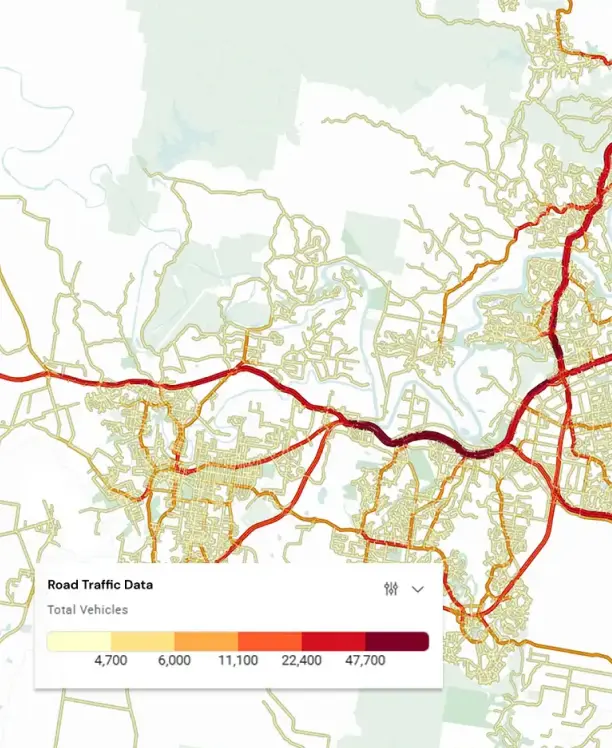
Traffic volumes and traffic count data provide a crucial but incomplete outlook on vehicle movements.
The decisions we make with traffic data aren’t just about 'how many vehicles'. They’re about outcomes: access, efficiency, freight reliability, safety, amenity, economic development, and resilience. Those outcomes depend less on how many vehicles pass a point and more on the journeys those vehicles are making.
Two road segments can carry the same daily volume but play completely different roles:
One may mainly support local access and short trips
Another may support network‑critical movement across multiple precincts
A count won’t reliably show the difference, but additional journey context allows analysts to look beyond the question of ‘how many?’ to ‘why?’.
Unlock Australia-wide traffic volumes in Planwisely
Volumes and demand are one (big) part of the puzzle
Volume metrics matter because they are essential for understanding demand, capacity screening, trend monitoring, and many other operational and investment decisions.
However, volumes are inherently limited in what they can explain: they describe what is happening at a point, but not how that point functions within a connected system.
Road traffic volumes show the scale of vehicle movements without the context around them.
As a result, volume‑based analysis often struggles to answer questions that matter most to decision‑makers:
Where are vehicles coming from and where are they going?
Is this road primarily supporting local access or through‑movement?
Which segments are network‑critical versus simply busy?
What happens elsewhere if this segment changes?
Which alternative routes do travellers actually use during disruption?
In practice, these questions are frequently answered with assumptions instead of evidence.
What changes when we understand journeys?
Journey analysis adds the context that pure traffic volumes can’t provide. By examining how vehicles move between origins and destinations - and how individual road segments support those movements - decision‑makers can understand the functional role of each part of the network.
Journey analysis can be used to understand the role a particular link plays in the larger road network, what it's being used for and who might be using it throughout the day.
With journey context, it becomes possible to:
Distinguish between segments that are busy and segments that are critical
Understand how road function changes by time of day and day of week
Identify dependencies and vulnerabilities in the network
Anticipate broader impacts of localised changes
Make trade‑offs with a clearer understanding of who is affected, and how
Journey analysis by road segment: from counts to connections
For planners, developers and more, understanding vehicle movements in specific segments of the road network can generate powerful, actionable insights. Journey analysis by road segment is available within Planwisely's Road Traffic Data module, and this granular focus allows analysts to identify how parts of the network contribute to complete trips — rather than treating roads as isolated count locations.
It provides visibility into:
The journeys that rely on a given segment
The origins and destinations connected by that segment
Directional and time‑specific movement patterns
The relative importance of segments within the network
For decision‑makers, this means road segments can be understood not just in terms of volume but also in terms of function, dependency, and consequence.
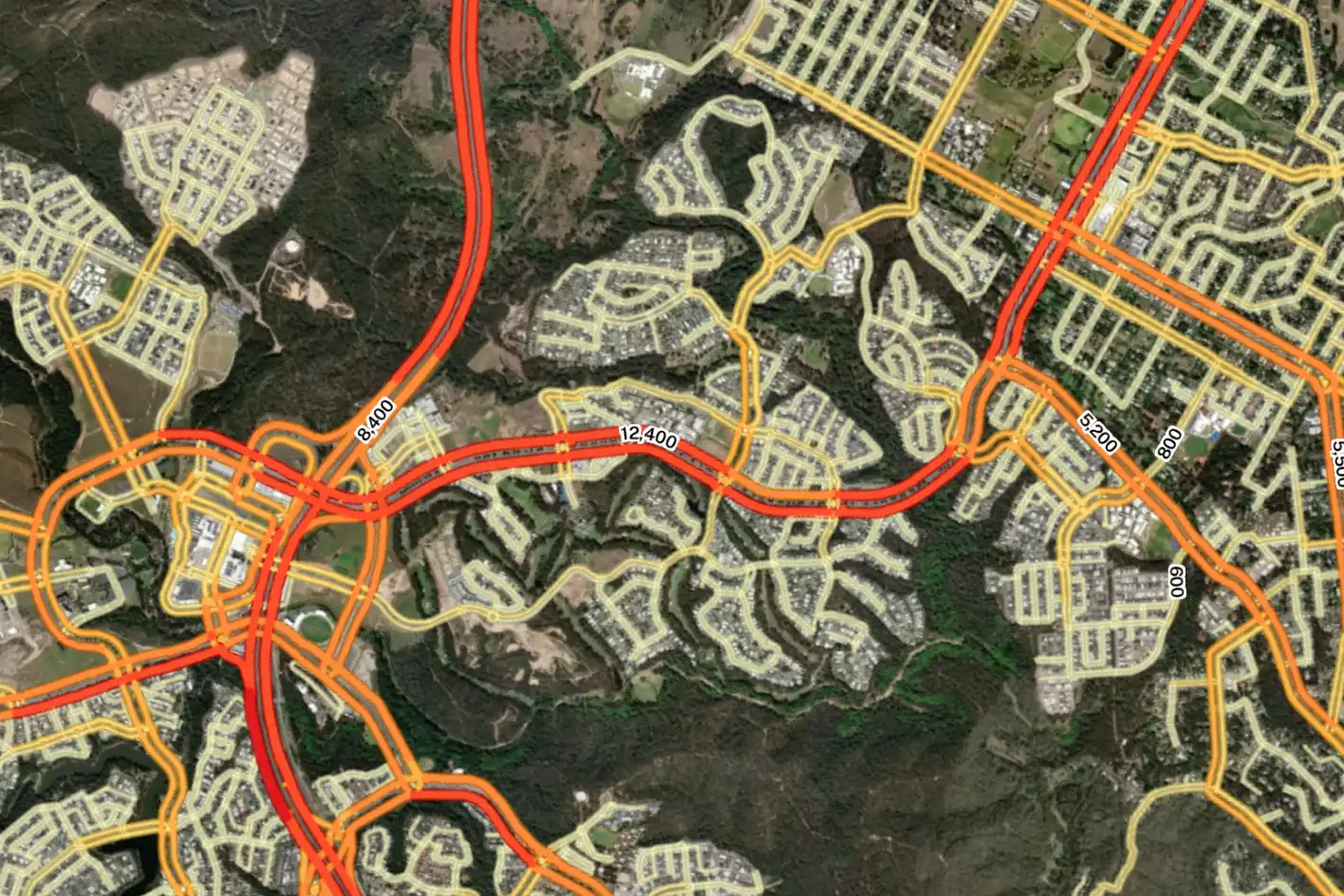
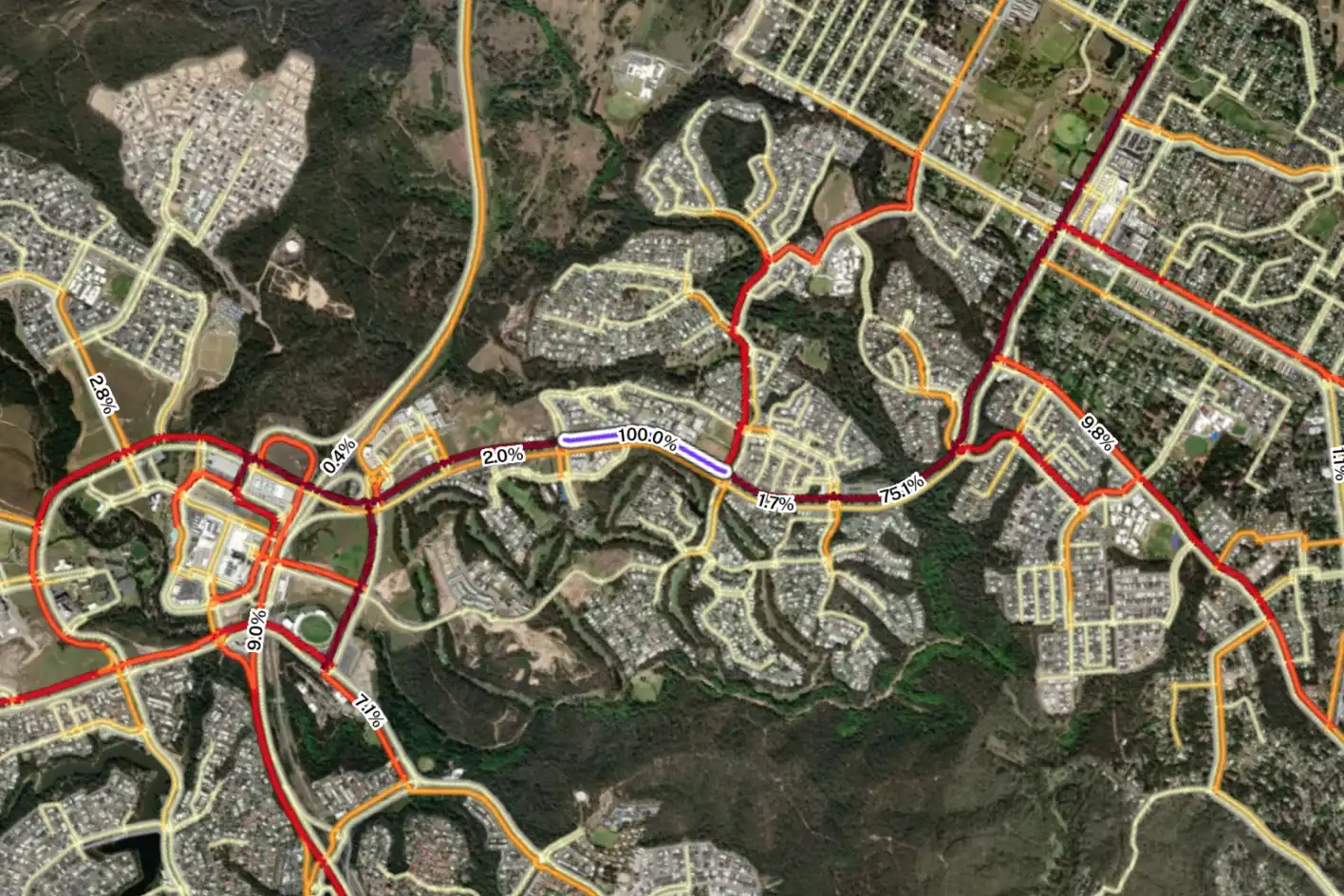
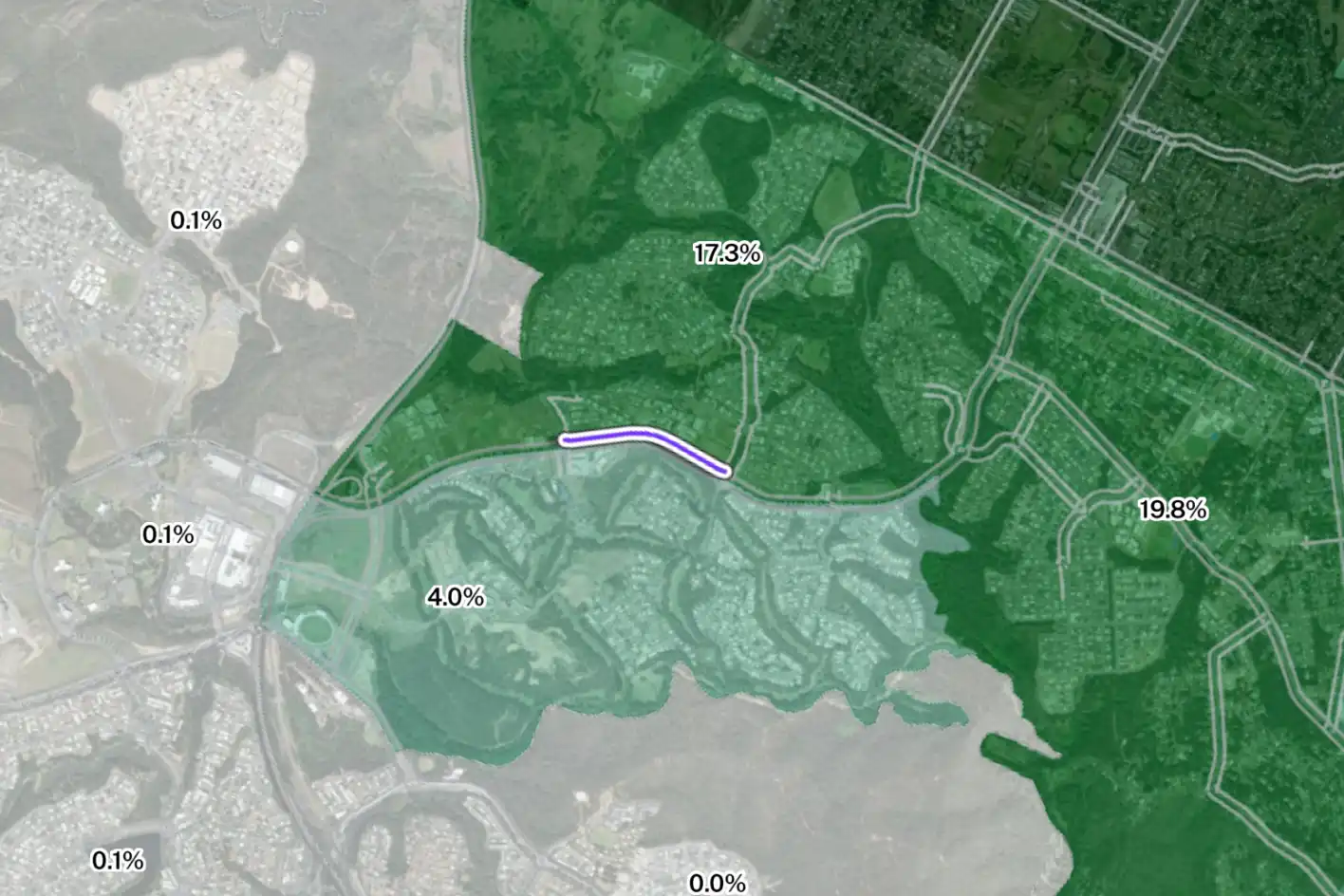
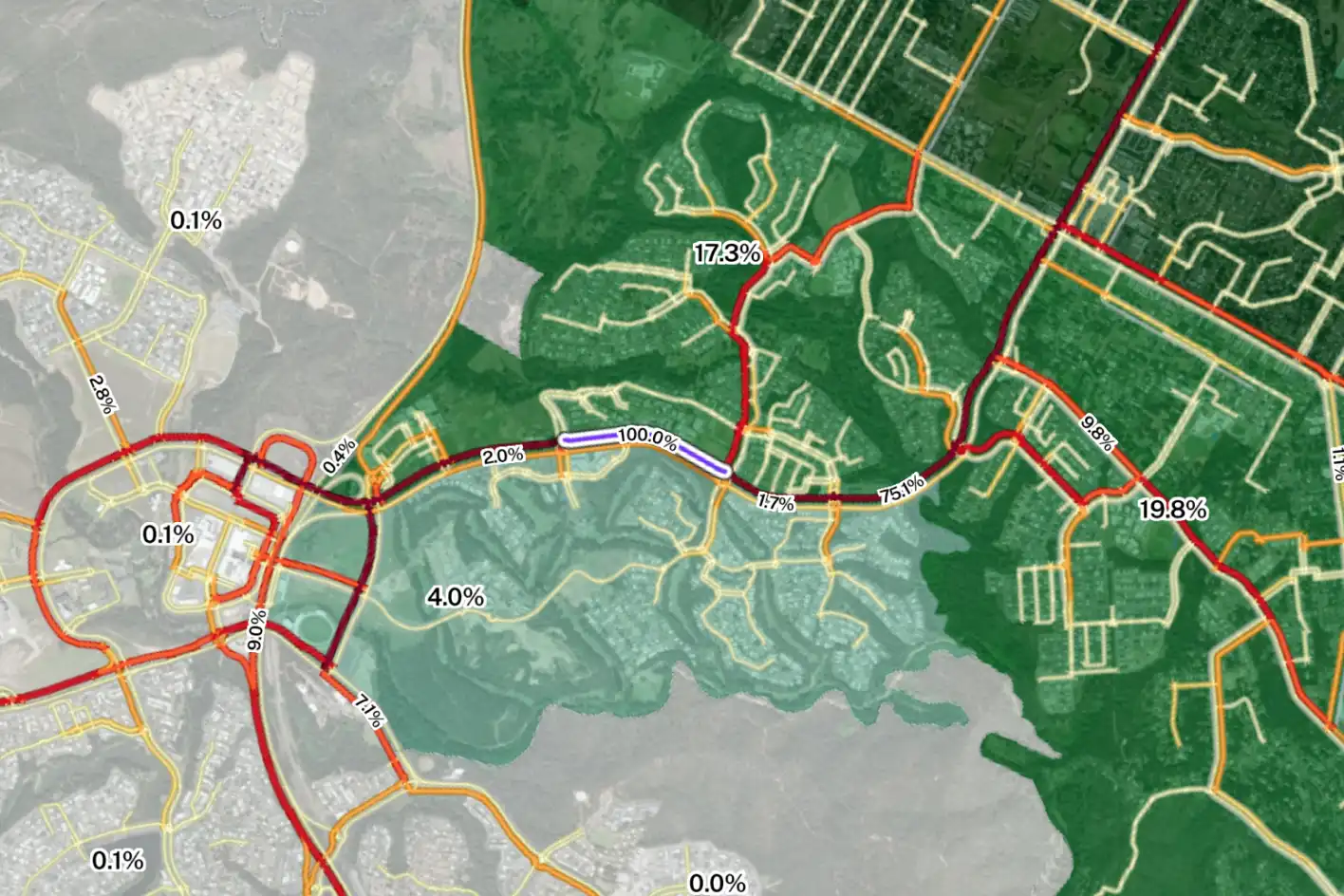
Here's an example of traffic volumes and journey analysis in Planwisely:
Journey analysis, which is available in Planwisely, offers contextual insights beyond pure traffic volumes.
How this creates value across key sectors
Different sectors start from different questions, but the value of journey context is the same: clearer decisions, fewer blind spots, and more defensible outcomes.
Public and private sector organisations alike can benefit from a deeper understanding of vehicle movements in specific locations or across the broader road network.
Local councils
Local governments often rely on volumes for street hierarchy decisions, traffic calming, access changes, and development impacts.
Journey analysis adds the ability to distinguish local access from through‑movement, understand displacement risks, and justify “place” outcomes without breaking network function.
State government
Transport agencies must prioritise investment across large networks with competing objectives.
State governments need to understand how the road network functions as a system to prioritise infrastructure investment.
Journey analysis adds evidence of which segments are truly network‑critical, where movement dependencies sit, and how corridor performance relates to real travel patterns, which helps strengthen prioritisation and business cases.
Retail and QSR
Retail and QSR often use traffic volumes as a proxy for exposure and demand.
Journey analysis adds the ability to separate pass‑by traffic from journeys that actually terminate near a site, making it easier to distinguish exposure from effective accessibility.
Unlock nationwide traffic volumes and journey insights
Property developers often need to use traffic data to assess access, connectivity, and viability.
Large property investments need rigorous data insights to avoid costly assumptions.
Journey analysis adds a clearer view of a site’s movement catchment — how it connects to employment, services, labour pools, and freight pathways — improving site comparison and staging decisions.
Freight and logistics
Freight networks depend on reliability, often within specific time windows.
Journey analysis adds insight into which links underpin longer journeys, what realistic detours exist, and where network fragility sits beyond average conditions.
Planning for movement, not just traffic
Together with traffic volumes or discreet vehicle count data, vehicle journey analysis shows scale and context that better reflects how road networks are actually used.
As planning and investment decisions become more complex (and the consequences of misalignment more significant), understanding journeys by road segment provides a clearer foundation for action.
Planwisely's Road Traffic Data includes traffic volumes and journey analysis of individual road segments, giving planners and real-world decision-makers the opportunity to identify the scale and context of vehicle movements across Australia. Derived from billions of mobile data points, Road Traffic Data allows you to go beyond traffic volumes to investigate how individual road segments are actually being used.






.webp)