One platform. Endless real-world applications.
Extend your core Planwisely platform access with specialised add-on data products for real‑world planning and decision‑making.
Fast and intuitive map-based analytics platform
Powerful tools for unearthing insights, creating reports and more
150+ curated geospatial datasets at your fingertips
Core Platform
Powerful location data and map-based analytics - all in your web browser.
Trusted by leading planners and decision makers
Frequently Asked Questions
We get it, it’s a lot to take in. Here are some of the most common questions we get.
Road Traffic Data volumes are validated using observed traffic counts collected by transport agencies. This validation assesses how closely the modelled volumes align with real‑world traffic across different regions and road types.
Road Traffic Data volumes are also validated at an hourly level, for weekdays and weekends separately.
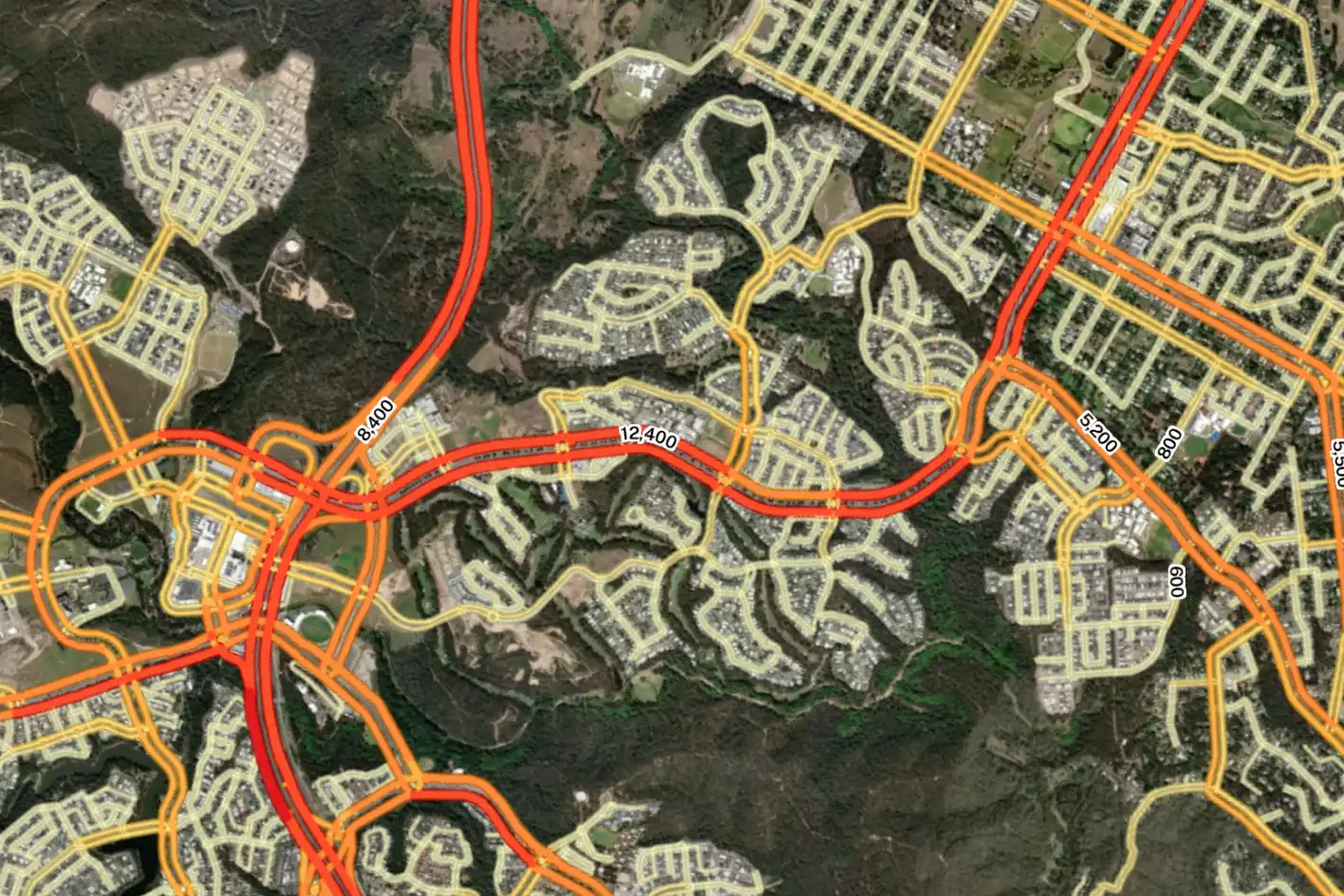
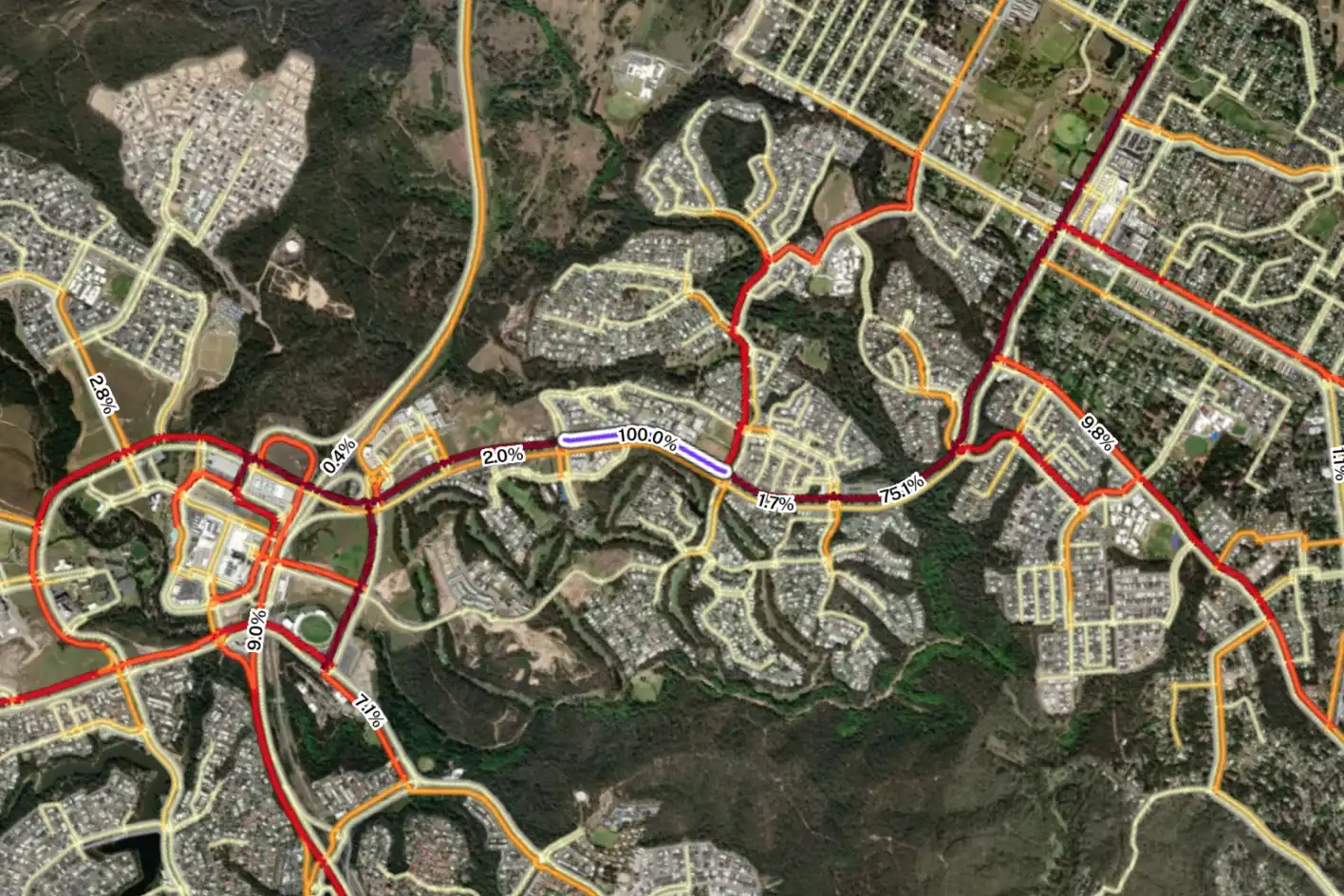
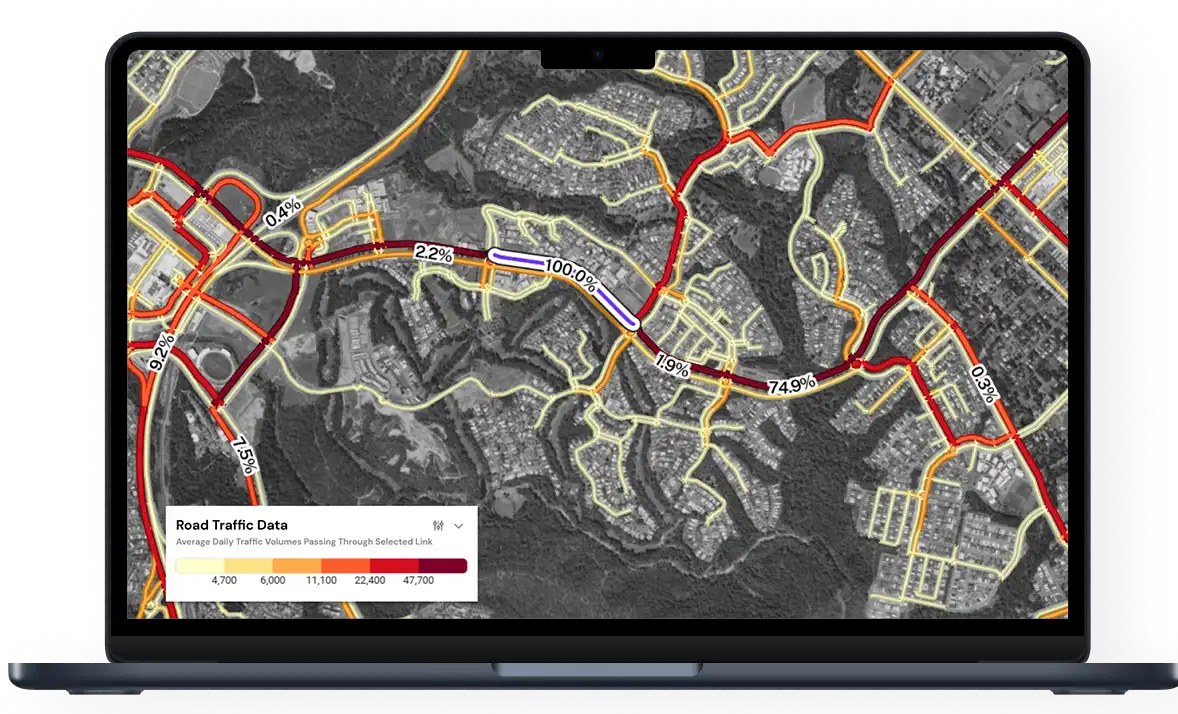
Planwisely’s road traffic data is built using anonymised mobile device data combined with a high‑quality national road network.
GPS events are first grouped into complete trips and statistically scaled to represent the wider travelling population. These trips are then routed across a cleaned, speed‑aware road network using advanced map‑matching techniques, including handling complex environments such as tunnels.
Before traffic volumes are finalised, a multi‑stage calibration process aligns modelled volumes with observed traffic counts. This calibration uses traffic count data from thousands of locations nationwide and adjusts results across road classes, hours of the day, weekday vs weekend patterns, and vehicle types. Where available, calibration is applied at both average daily and hourly levels.
Finally, rigorous quality checks remove implausible or distorted trips, ensuring the resulting traffic volumes are robust, consistent, and suitable for planning, analysis, and decision‑making.
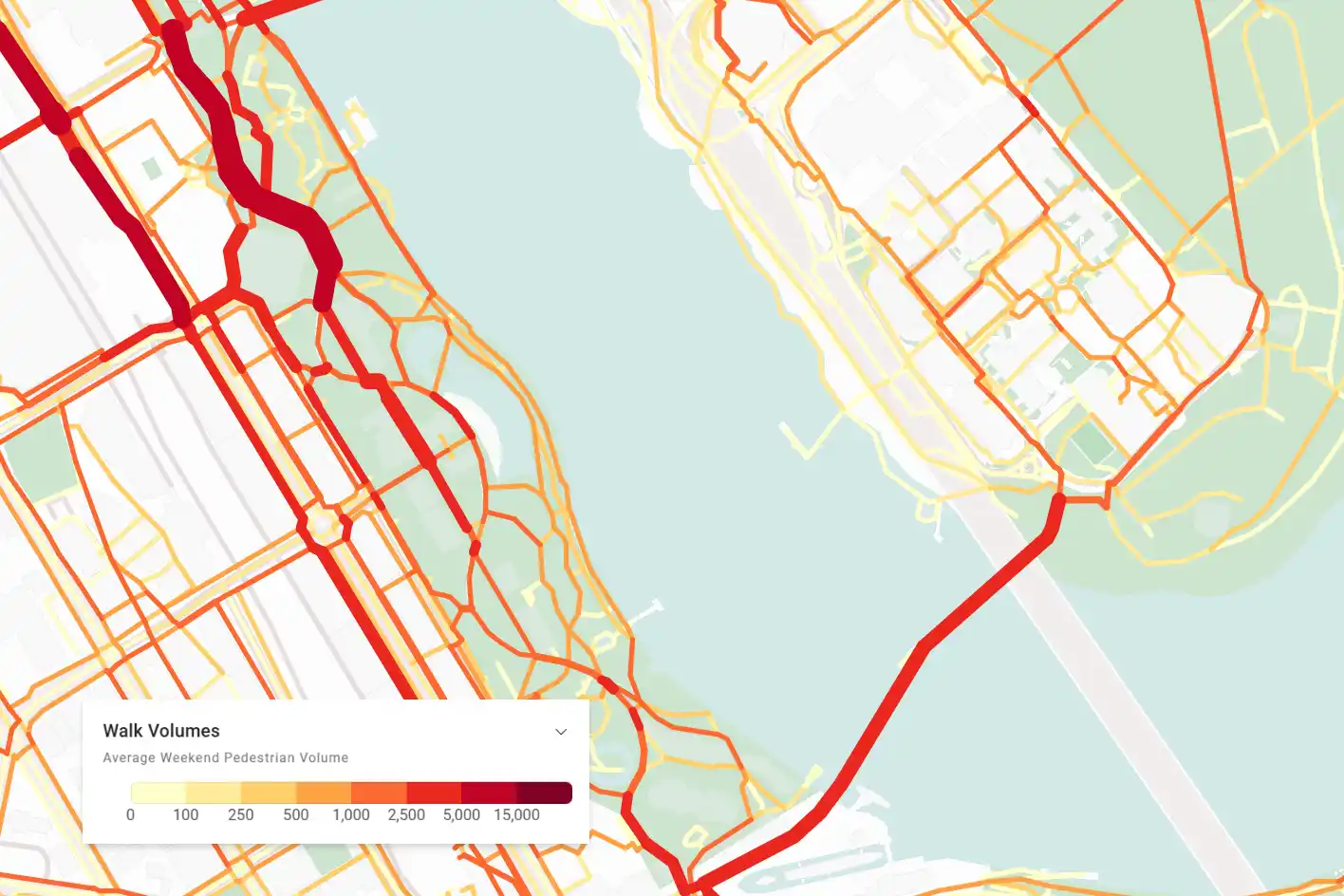
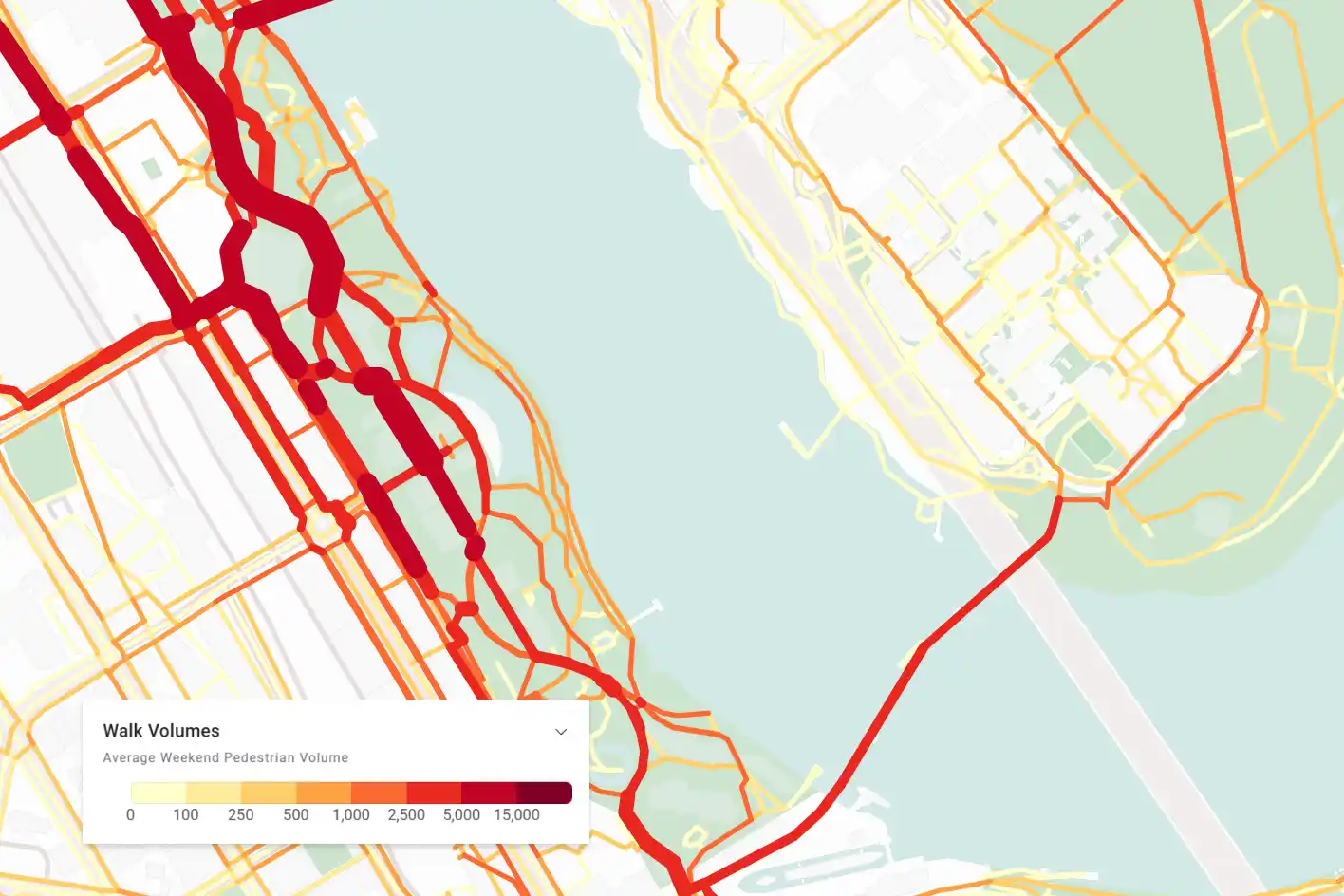
Planwisely Foot Traffic Data combines a wide range of place factors, network factors and travel pattern data to determine the current day walking and cycling patterns and volumes.
The PATH network is derived from the OpenStreetMap (OSM) network and then refined to create a robust, active transport-focussed network.
Because it is derived from GPS location events, the GPS mobility data (People Movement Data) that informs Foot Traffic Data has a uniquely high level of spatial accuracy.
To test whether it is properly representative of people's travel behaviours, VLC has undertaken extensive ground truthing research. This includes: household travel surveys (both metropolitan and regional); pedestrian hourly profiles; traffic count profiles; shopping centre visitation profiles by day of the week; National Visitor Survey research to understand tourist visitations; and stadium attendance for major events. This research has demonstrated definitive correlations between these datasets and People Movement Data in ways that support the theory that People Movement Data is a highly accurate and valuable geospatial dataset.
The PATH network is derived from the OpenStreetMap (OSM) network and then refined to create a robust, active transport-focussed network.
PATH combines a wide range of place factors, network factors and travel pattern data to determine the current day walking and cycling patterns and volumes.
Running a model scenario is a complex task that traditionally requires large amounts of computing power and the expertise of a dedicated transport modeler.
This process can often take many weeks to complete. However, thanks to its advanced modelling engine, running a scenario within PATH can be completed in a matter of hours, while larger, more complex scenarios in more densely populated areas can take longer.
Users can inspect the status of their scenario model run within their PATH account.
There is no limit to the number of scenarios you can create.Testing scenarios, however, requires pre-purchased modelling credits, with one credit allowing you to test one scenario.
You can choose the number of modelling credits you want added to your account when you purchase a PATH license, while additional credits can be purchased by contacting your Planwisely Account Manager.
You can view how many modelling credits you have remaining on your account within the platform when you are logged in to PATH.
A ‘scenario’ is the group of inputs (changes to the network, demographics, land use or public transportation services) you want to measure the impact of using PATH’s predictive active transport model.
PATH uses a powerful predictive modelling engine to estimate future walking and cycling travel patterns and volumes.
These results are informed by ‘scenarios’ you create to test your choice of edits to the network, demographics, land use or public transportation services.Using the combined inputs of your scenario, PATH’s predictive model will then provide clear and robust data insights on future walk and cycle demand and volumes to illustrate your scenario’s predicted impact.
PATH is a module within Planwisely that can be licensed independently or packaged with access to Planwisely’s core geospatial data library and analytics tools (recommended) to complement PATH’s unique walking and cycling-specific capabilities.
Contact us today to find the package that suits your needs and get started with PATH today.
Each year's estimates are produced to be the most accurate given available data. Given data available on network details and traffic counts changes in terms of locations each year, comparing individual roads between years can be misleading. For this reason, multiple years are not recommended to be compared in order to understand trends.
Zenith Traffic Estimates represents an average school term day in the year it was released.
Zenith Traffic Estimates is underpinned by the Zenith travel model, which has been used to create $100bn+ of transport infrastructure in the 35+ years since it was created.
The Zenith traffic model is based on behavioural relationships estimated from information given by residents in household travel surveys. This is then calibrated against other available datasets such as travel counts, travel times and public transport passenger surveys, while taking a range of behaviours like trip purposes, trip destinations, mode choice and route choice into account. Zenith's backend complexity and proven robustness are both leveraged to create Zenith Traffic Estimates and its precise estimations of traffic volumes.
Traffic volume estimates and related travel datasets are useful for a range of industries, including site selection and network planning for retail brands, Out Of Home (OOH) and Digital Out Of Home (DOOH) media assessments and analysis, various urban and transport planning disciplines and more.
Zenith Traffic Estimates is an output of Veitch Lister Consulting's (VLC) Zenith traffic model. Zenith is a strategic travel forecasting model that, using validated behavioural travel data, simulates travel to intelligently estimate travel volumes, times, speeds and more.
Zenith is capable of estimating how many trips people in each household make, the purpose of each journey, where people are travelling, what mode they will take, what time of day they'll make the journey and which route will be taken. This depth of analysis is why Zenith has been used to support the planning of $100bn+ of transport infrastructure across Australia, and it is what gives Zenith Traffic Estimates its high level of precision for traffic volume estimation.
Zenith Traffic Estimates is updated once per year.
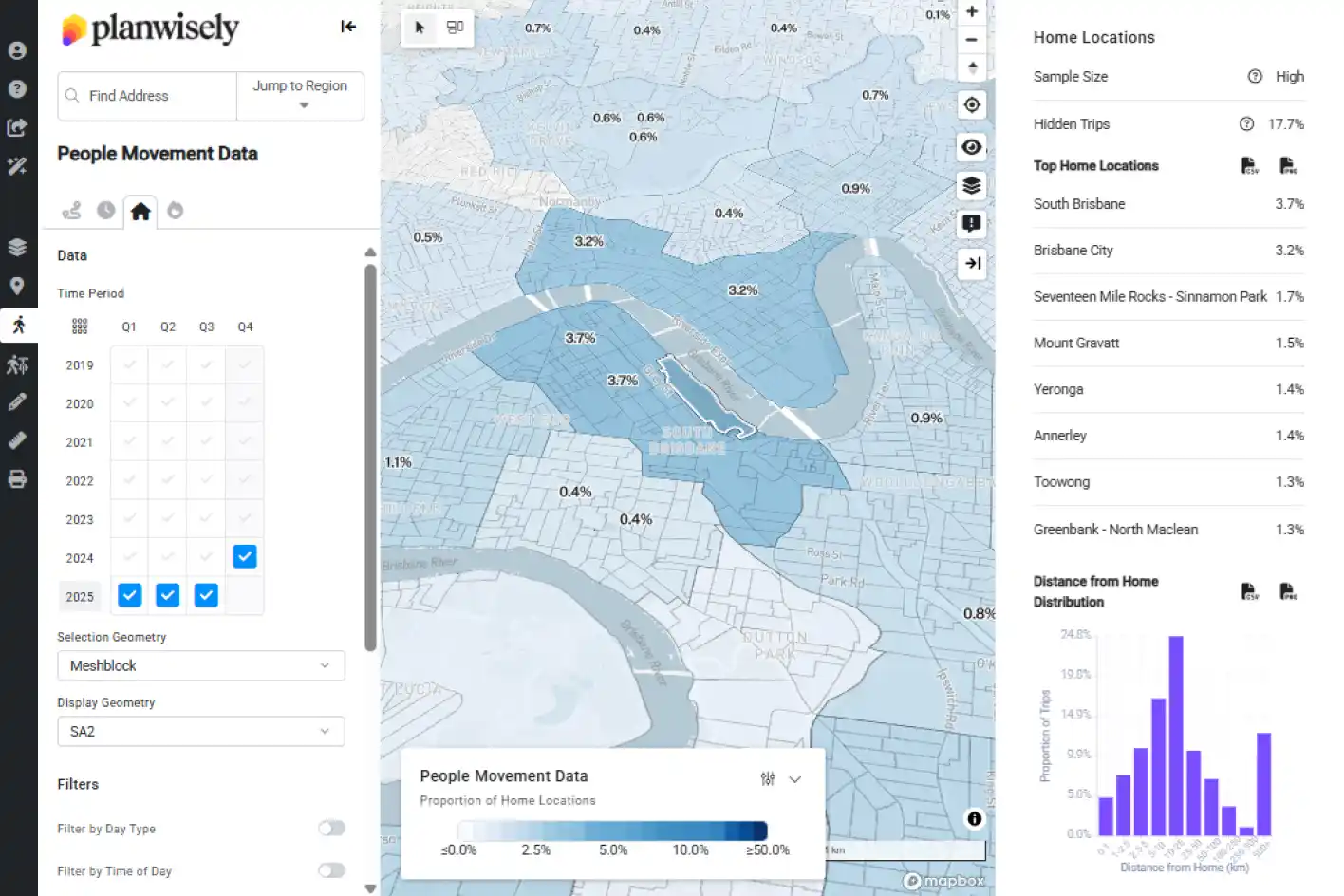
People Movement Data (sometimes called Human Movement Data) is a set of GPS signals that is collated from mobile device owners who have opted in to have travel data collected through a number of different mobile apps.
Each GPS signal contains a latitude and longitude, timestamp and an identifier linking the GPS signal to a device via a randomised identifier created by the data provider.
Pseudonymised data is data where identifying information is hidden by the data provider for privacy reasons.
Typically, this is accomplished by assigning a new identifier to each entity. In People Movement Data, this identifier relates GPS signals to a device, but we can’t verify which particular devices are used in this data.
VLC (Veitch Lister Consulting), the creators of Planwisely, purchase the rights to use aggregated People Movement Data and safely repurpose it for the platform.
VLC processes the GPS signals that come together to form People Movement Data to obtain ‘dwells’ - which are periods of limited movement (<150m) - and trips that represent movements between dwells. Not all GPS signals will make up a dwell, and not all dwells will make up a trip. Therefore, the trips dataset will be smaller than the dwells dataset which will again be smaller than the initial set of GPS signals. Pseudonymised GPS signals are still sensitive information, so Veitch Lister Consulting then aggregates the GPS signals, dwells and trips by area.
Planwisely's People Movement Data aggregates overall movements and dwells, which means it can visualise travel behaviours and visitation patterns.
In addition to this, it is gathered from timestamped GPS data, it has the potential to demonstrate movement changes over time or during specific times of the day or night with a high level of spatial accuracy. Because of these facts, People Movement Data can uncover strategic insights for all manner of planning projects: urban and strategic planning, urban design, site selection, tourism, transport and traffic, Smart Cities, economic development, Placemaking, open space parks planning, recreation planning, Out Of Home advertising, social planning and other applications.
Because it is derived from GPS location events, People Movement Data has a uniquely high level of spatial accuracy.
To test whether it is properly representative of people's travel behaviours, VLC has undertaken extensive ground truthing research. This includes: household travel surveys (both metropolitan and regional); pedestrian hourly profiles; traffic count profiles; shopping centre visitation profiles by day of the week; National Visitor Survey research to understand tourist visitations; and stadium attendance for major events. This research has demonstrated definitive correlations between these datasets and People Movement Data in ways that support the theory that People Movement Data is a highly accurate and valuable geospatial dataset.
Mobile providers gather and package opt-in GPS signals from their users, which is then processed and licensed under strict conditions to prevent the identification of any individuals to which the data pertains.
This data is gathered from the Location Based Services (LBS) of devices like phones, cars and fitness trackers. LBS is a term that refers to software technology that uses a mobile device’s geographic location to provide a service or information to the user in real-time.

Want to get started with Planwisely?
Use powerful geospatial datasets to uncover insights, guide your decision-making process and deliver better outcomes for your project today.